Pages

Tuesday, January 17, 2012

Common Misused Passages of the Bible - Matthew 18:15-20


“If your brother sins against you, go and tell him his fault, between you and him alone. If he listens to you, you have gained your brother. But if he does not listen, take one or two others along with you, that every charge may be established by the evidence of two or three witnesses. If he refuses to listen to them, tell it to the church. And if he refuses to listen even to the church, let him be to you as a Gentile and a tax collector. Truly, I say to you, whatever you bind on earth shall be bound in heaven, and whatever you loose on earth shall be loosed in heaven. Again I say to you, if two of you agree on earth about anything they ask, it will be done for them by my Father in heaven. For where two or three are gathered in my name, there am I among them.”

(Matthew 18:15-20 ESV)

Many people seem to like to use the last verse of this famous passage from the Bible as justification for any kind of prayer meeting or church service that God is blessing. How often have you heard people say this in a prayer when there is only two or three gathered there? Put the verse into context and we see that this is related to church discipline. Jesus is saying that when there are two or three agreeing on a topic of church discipline or disciplining a brother in Christ in agreement with each other, He is there with them agreeing with them. Of course, it's not vogue to exercise church discipline, but it is Biblical. Thoughts?

Enhanced by Zemanta

Monday, January 16, 2012

Free Porn Filter for Your Home PC or Network

Image representing OpenDNS as depicted in Crun...
Image via CrunchBase
Someone in my small group recently told me about a free online porn filter for your PC that also speeds up your internet connection. I had heard of OpenDNS before, but had never really attempted to use it. Apparently they have added a family parental controls feature for free. There is a premium version, but apparently the free version does quite well. As my children get older and get on the computer more, I don't want them randomly getting to sites as well it protects you from going places you should not go. The features of the OpenDNS FamilyShield are:


  • Instantly blocks access to adult websites. No complicated configuration.
    FamilyShield is pre-configured to block adult websites across your Internet connection.  Just turn it on and go.  The filter is always up-to-date, adding new sites 24/7.
  • Flexible parental controls that protect every Internet-connected device in your home, instantly.
    When you set up FamilyShield on your router, every device in your home gets protected. That means everything: your kids' Xbox, Playstation, Wii, DS, iPad, and even their iPhone.
  • Built-in anti-fraud and phishing protection.
    Take the guesswork out of identifying fraudulent sites. FamilyShield automatically blocks phishing and identity theft websites.
  • Makes your Internet faster and more reliable.
    Setting up FamilyShield frees you of frustrating, intermittent Internet outages and makes Web pages load faster, which makes your overall Internet connection faster.
  • Free.
    OpenDNS FamilyShield is free to use for home networks. Some limitations apply.
The premium version adds stats so that you can see what's being visited (or attempted to visit) on your network, and premium customer support. Many people recommend adding anti-phishing software and anti-spyware software to your home computers, but I've never had the need for them. I run Avast as my anti-virus software, which includes some of that. It looks like OpenDNS adds to that as well. If you're looking to add quality blocking to your internet for cheap or free, I think OpenDNS is a great solution.


Enhanced by Zemanta

Tuesday, January 10, 2012

A Mormon, a Christian, and a Catholic run for President...

The red "GOP" logo used by the party...
Image via Wikipedia
And people seem to like the Mormon. I know the focus is on New Hampshire today, but the primary I vote in is only a week away, the South Carolina Republican Presidential Primary. Actually, there are two Mormons, at least two Christians, and at least two Catholics running. Why define them by their religious category? Because I don't believe that you can separate who you are in your religion from you are as a person, try as one might, especially if one is of another political party. With a week to go, let's examine the top candidates to see where they stand and have stood on issues. Iowa brought out the top three candidates as I have stated in the title of the post.

Mitt Romney seems to continue to dominate the polls right now. He belongs to The Church of Jesus Christ of Latter-day Saints (Mormon), but never references his faith in his speeches. Much debate has been going on in Christian circles about whether to vote for a Mormon candidate and much has been swept under the rug in favor of a candidate that might be able to defeat President Obama. Frankly, Romney's record speaks as big of a volume to me as his religion does. He instituted a failing health care plan in Massachusetts, of which the health reform act signed into law by President Obama was based on. He never references that in his speeches and I'm quite sure that he is probably not the candidate to attempt an overturn of the health reform act. Romney also used to be pro-abortion until it appears it became expedient for him to be pro-life. Yes, Romney may be good at business and maybe he turned the Salt Lake City Olympic games into profit, but his record speaks for itself. He was governor of Massachusetts. That gives him executive experience, but that doesn't make him a fit candidate. He cannot be trusted. His religion cannot be trusted. I don't care how much people say that Mormonism has changed. Who's not to say that some prophet will issue a new decree changing something else? Mormonism is not nor will it ever be another Christian denomination unless they throw out the book of Mormon, which obviously does not appear likely. Mormons consider anyone not of the church to be apostate and have some very weird beliefs similar even the Church of Scientology. We know how weird they are. Christianity is not without it's kooks, but we also like to ignore them.

Ron Paul seems to be the top Christian in the race. He has constantly been misunderstood, misquoted, and thrown under the bus. I don't think that's quite fair to him. Sure, he is quite Libertarian in his stances on things, but it's Constitutionalist, for the most part. He defers to state's rights. He is probably the most pro-life candidate running. Remember, he was a former OB/GYN and has delivered thousands of babies. Now, that doesn't make someone pro-life necessarily, but he is very anti-abortion. Some point to a recent debate to try to prove that he's not as anti-abortion as he says, but they miss his point in stating that the Federal Government was wrong in getting their voice in the abortion ring. It should be the states who decide, not the Feds.  He's all for a constitutional amendment barring abortion, but since it's not in the Constitution, we must defer to the states. The same goes for legalized drugs, particularly marijuana. He's not for legalized drug use, but for allowing states to decide the issue. On economics, it's the reason he got into politics. Nixon abolished the gold standard, Paul saw the writing on the wall that we would be in the financial state we are in now, and he got into politics. On foreign affairs, Paul is no different than the founding fathers. We have made a mess of ourselves in Iraq (a war we never should have started). In turn, we made a mess of Afghanistan, because we never finished it. Paul is not an isolationist, as some assume. He is simply a realist. We are losing a lot of money overseas to made-up reasons for war. He has isolated a lot of the Christian voter, however because of his stance on Israel, even though it is probably more Biblical than most of the Christian voters' stances. He is an advocate of homeschooling and parent's rights in raising and educating their children. One thing is for certain, he clearly holds to his line and does not have much of a record of change.

Rick Santorum was the surprise second-place candidate in the Iowa caucuses. To be honest, I don't know enough about Santorum or his record to make an adequate judgment call. I do know he is Roman Catholic. I know he is pro-life. I also know that he has voted for a lot of spending when he was in Congress. I have not seen or heard him speak very much. The evangelicals seem to love him at the moment as an alternative to Romney. He was the author of the Welform Reform Act in 1996, which the Democrats like to take credit for since Bill Clinton signed into law. He is also a homeschool parent and and advocate of homeschooling. The problem I have with Santorum, perhaps, is that he seems too much like the standard G.O.P. candidate. He says all the right things just to get elected and just follows the party line. We've seen this before and we had eight years of war and spending.

I'll do a quick run-through of the other candidates. I absolutely do not trust Rick Perry. He's the other Christian candidate in the race, but he's too wild and unpredictable as a politician. We must remember that he overrode his state legislature to force parents to vaccinate their girls against a sexually-transmitted disease that causes cancer. Is that the kind of candidate you want? He has never gone back on what he did with this. We already have a president that thinks he can force people to do what he wants regardless of the consequences. Newt Gingrich is just another flip-flopper. Sure, he was one of the primary checks against President Clinton in the 1990s, but I don't trust him either. Stands for family values? Really? How many times has he been married now? And how many of those were because of adultery? Who knows anything about Jon Huntsman other than he's a Mormon?

With all that said, let us be careful who we vote for in this election. Many Christians even voted for Obama last election and look what we have. We don't have much. I'll be honest, I've voted for candidates based on electability or just to beat the other candidate. Although, I did vote for a Democrat candidate for Senator in the last election because he was more Republican than the Republican candidate. Someone told me I shouldn't do that because voting Democrat is voting for liberalism, which is really a dumb statement. As Christians, we really need to separate our political affiliation from Christianity. We cannot and should not be simply single-issue voters or voters on electability. If President Obama gets elected again, so what? He more than likely be a lame-duck President anyway, based on the last four years. To be honest, there's only one candidate that I fully trust and it shouldn't be too hard for you to figure that one out. Will he win? Probably not, but at least my conscience will be clear.
Enhanced by Zemanta

Tuesday, January 3, 2012

Free Audiobook for January 2012 - "Knowing God" by J. I. Packer

Cover of "Knowing God"
Cover of Knowing God
Christianaudio.com is offering J. I. Packer's classic, "Knowing God" for free this month. Visit their site, add to cart, and download. Enjoy listening and may be you be encouraged in your faith.

Download Here
Enhanced by Zemanta

Friday, December 30, 2011

[Audiobook Review] Real Marriage by Mark & Grace Driscoll


I have been a listener of Mark Driscoll's podcasts for years and have enjoyed listening to him preach. This book is his (and his wife's Grace) first book on marriage, which is apparently also launching their first nationwide marriage conference tour. I found the book to be rather engaging, much like Driscoll's preaching style. The Driscolls' aim in the book seems to be to present a modern relevant "Biblical" view of marriage to modern Christians.

The good: Much of this book is very good. The narration was quite excellent as there was a male and female narrators to read the relevant sections of the book that either Mark or Grace wrote. It was clear and understandable. Grace gives much of her back story that many of us have never heard through the Mars Hill podcasts. It helps us men to appreciate loving our wives even more and reaching out to them. Mark gives a lot of information as well about his story and how Grace and he came together and where they are at now. Much of this book is more autobiographical than anything else, which is very helpful. The Driscolls are very honest about how their marriage was falling apart and how it was put back together through God's grace and the help of Godly people.

The bad: While the book may be culturally relevant to the people of Seattle, and maybe the rest of the West coast, I'm not so sure how relevant it is to those of us in the deep South (Georgia, Alabama, South Carolina, Tennessee, Kentucky, Mississippi). The chapter on sex and what's lawful and helpful is mostly what I'm referring to. I like how Driscoll frames it in the form of questions as to whether it's lawful (most is lawful), and helpful (he comes to the conclusion that most is, within the context of marriage). However, I don't think I do agree with him that most of it's helpful. I've heard this stuff before from him through his podcasts and I didn't find it helpful then. Basically, I think he's going a little far. Tim LaHaye came close to what Driscoll is doing with a little book on marriage in the '70s, so this isn't anything new. If you easily get embarrassed, then this section of the book will definitely get to you.

Overall, the book is well-written and should provide for a new perspective on marriage from a couple who has been through tough times. Much of the book is helpful and should help couples to examine their marriages and bring them closer together. As others have expressed, and I express now, there's one section of the book that will bring lots of debates in the months to come.

This audiobook was provided free for review by the Christianaudio.com reviewers program.

Enhanced by Zemanta

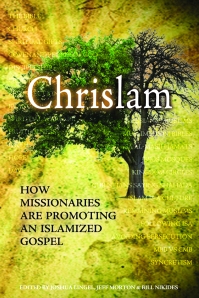
Dr. Warren Larson's Review of "Chrislam"

Dr. Warren Larson, the former director of the Zwemer Center for Muslim Studies at Columbia International University has given a helpful review of the book, Chrislam: How Missionaries are promoting an Islamized Gospel (Joshua Lingel, Jeff Morton & Bill Nikides, eds. i2 Ministries Publications, 344 pages, $25). The book has apparently been put together to counteract much of what is being perceived as syncretism in the Muslim world by Christian missionaries, mostly the "Insider Movement."  Dr. Larson calls the editors out in their preface:
On the negative side, the Preface (iii-iv) is especially troubling: It contains inaccuracies, misperceptions and unbiblical attitudes.  A statement in the second paragraph, “… [W]hat is at stake is not our personal relationships with brothers and sisters” suggests it does not matter what we say about fellow-believers, as long as we tell what we think is the truth.  A comment in the third paragraph makes a generalization about all IM ministries:  “… [N]o churches are planted …” Such sweeping statements set the tone for what is to follow.  This book is reactionary, primarily a work of extremes, including an alarmist and inflammatory title. 
Not all is negative. He does praise the authors of some articles in some of the sections:
On the positive side, sections one and five have the most value: The first section quotes IM proponents extensively, however taken out of context, may give impressions never intended by the authors.  Section five gives Muslim converts (mostly Bengali) a voice in expressing strong opposition to IM; however other Bengalis could be called upon for the exact opposite view.  
I have not read this book, but should I be given the opportunity, I would probably take it with a grain of salt. The topic of Insider Movements hit the Presbyterian Church of America (P.C.A.) earlier this year at their General Assembly when one church presented a motion for the denomination to disassociate itself from organizations associated with the Insider Movement, primarily SIL, Wycliffe, SIM, and the Navigators. What came out of that was a recommendation that churches "could" stop support of such organizations if they wanted to and several churches have, from what I know, even though the missionaries they support may not be involved in Muslim missions or the Insider Movement at all.

After this recommendation came out at the PCA General Assembly, I tracked down an article written by George Houssney, a missiologist and very vocal critic of any kind of contextualization. Basically, he had written a position paper on the Insider Movement back in 2010. The PCA used this position paper as justification for making their recommendation that churches could stop support to certain organizations regardless of what the missionaries being supported were doing. So, who was targeted? Nabeel Jabbour, a Syrian, now American Citizen, who worked in Egypt for the Navigators, now living in Colorado Springs was one. I count him as a friend of mine whom I have also had the pleasure of taking a class from at CIU. Quoted from the paper:
color portrait of Nabeel Jabbour
Dr. Nabeel Jabbour (Image via Wikipedia)
Nabeel Jabbour, a Navigator leader, believes that Islam as a religion started down the right track but jumped off the rails. (Said to me personally during a three hour meeting in my office.) He mentioned several Muslim reformers whom he admires. These, and many others who have bought into the Insider mentality believe that Islam needs to be reformed, not abandoned.
Now, I am almost positive that this is taken way out of context, as is most of what Houssney is offering as proof of syncretism. Phil Parshall does not appear to be targeted, but I'm fairly certain that SIM is targeted because of his association with them, even though he advocates a C3-C4 approach to contextualization. The CAMEL method of the IMB was targeted even though it has been very effective and is more of a C4 level of contextualization. Basically, there were a lot of generalities, quotes taken out of context, and  bad research. Incidentally, Dr. Jabbour is now on a study committee for the PCA to look at the Insider Movements as a result of the recommendation at the General Assembly.

I am sure the editors and authors of "Chrislam" are well-intentioned, but we must do careful research and quote people properly rather than have an agenda. This happens too often in Christian circles and people get hurt. I'm providing several links to the papers mentioned in this post here at the bottom for you to do your own research.

Resources:
Jay Smith's Assessment of Insider Movements, C5 Missions Strategies
At The PCA General Assembly – Statement concerning errors of “Insider Movements” translations approved, but stumbles over procedures on approving a study committee

Position Paper on the Insider Movement by George Houssney


Enhanced by Zemanta

Decade

This is enough to put anyone in a coma, I think...